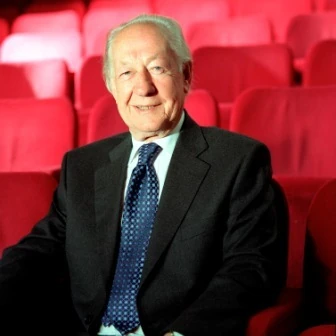

Brian Matthew
Brian Matthew (17 September 1928 – 8 April 2017) was the presenter of Radio Two's Saturday morning programme Sounds of the Sixties from 1990 to 2017. The show and its music looked back to the time when Matthew was a household name, hosting the BBC Light Programme's popular and influential Saturday Club, introducing the ITV pop show Thank Your Lucky Stars and broadcasting regularly on Radio Luxembourg, but like many broadcasters of his generation he began his career during National Service, working in Hamburg for the British Forces Network in 1948-49. He trained as an actor, worked in rep and for the international service of Radio Netherlands before joining the BBC as an announcer in 1955. He began to present Saturday Skiffle Club for the Light Programme in 1957; in 1958 the show changed its name to Saturday Club and became the BBC's leading pop show until the start of Radio One in 1967. Guests included the Beatles, with whom Brian Matthew established a friendly relationship, and the programme's mixture of new records and live sessions made it the most forward-looking show of its day. In the second half of 1964 he presented a weekly late-night show with a similar format, which was to be revived by its producer Bernie Andrews when Radio One began; its name was Top Gear.
In the mid-'60s, the offshore pirate radio stations won the young pop audience from the BBC and produced many new DJs, some of whom became familiar voices of the new Radio One. Brian Matthew and other established BBC figures tended to be sidelined in favour of the newcomers and after being removed from Saturday Club he moved to Radio Two to present a variety of regular programmes. Yet unlike many of his peers he retained an interest in contemporary pop, presenting a radio version of Top Of The Pops and an album show for the BBC World Service, as well as The Beatles Story for Radio One. His interviewing skills made him a suitable presenter for My Top 12, in which artists selected and introduced their favourite tracks. In 1977 he began Round Midnight, a magazine programme which was adventurous for a Radio Two show, covering a range of topics from music, the arts and show business and featuring many studio guests. It was axed, controversially, by a new Radio Two controller in 1990. But Matthew soon became the regular host of Sounds Of The Sixties and, with the help of his producers Roger "The Vocalist" Bowman and Phil "The Collector" Swern, made it into a highly popular show with - unlike most "golden oldies" radio - a wide-ranging and varied selection of Sixties music, including LP and EP tracks, B-sides and obscurities alongside familiar hits.
In February 2017, Matthew was told by the BBC that he would no longer host Sounds Of The Sixties - a decision which provoked controversy and protests from "avids", as the show's keenest listeners were known. The show was moved to an earlier time - 6.00 - 8.00 on Saturday mornings - and its format was changed so that the main emphasis would be on radio hits. Matthew was replaced by another DJ who made his name in the 1960s, Tony Blackburn.
Links to Peel[]
In Chapter 2 of The Peel Sessions, Ken Garner describes (pp. 25-36) how Saturday Club, the BBC's cutting-edge programme of its era, led to a modernising of the Corporation's method of recording pop music sessions, thanks to the innovations of future Top Gear producer Bernie Andrews. Garner (p.30) quotes the journalist Bob Woffinden on Matthew's "authority and unruffled professionalism...surely one of the outstanding voices in post-war radio".
The first Top Gear series in 1964-65 was produced by Bernie Andrews and presented by Brian Matthew. Like the Andrews/Peel shows of 1968-69, they provoked both listener enthusiasm and concern from the BBC hierarchy, so that after Christmas 1964 Top Gear was reduced to one hour and moved to Saturday afternoons, before being taken off the air in June 1965.
Some of the sessions recorded for Top Gear and other Peel shows were repeated on other programmes, including the Top of the Pops radio show produced by the BBC for World Service and export use - and hosted by Brian Matthew. These programmes were sent on transcription discs to overseas radio stations, as Ken Garner recounts (The Peel Sessions, p.70), but in the course of time some of the discs began to circulate as collectors' items, and some Peel sessions were eventually reissued on CD with Brian Matthew's links and voice-overs included.
External Links[]
- Wikipedia
- andywalmsley.blogspot.com: Account of Brian Matthew's career with audio clips
- Radio Rewind